
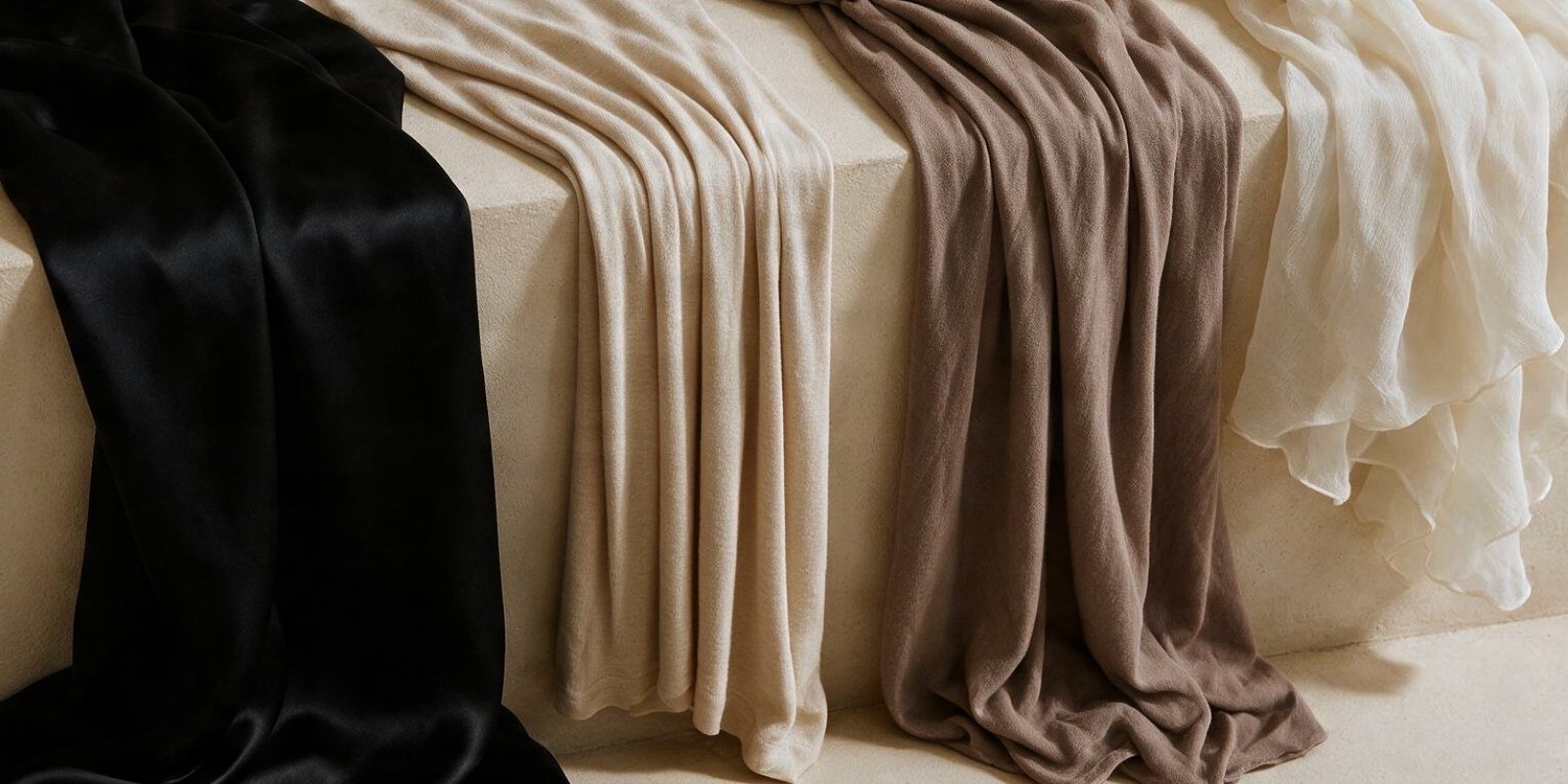
The fabric is the single biggest thing that decides how a hijab feels, sits, breathes and lasts. This is the complete, honest guide to every hijab fabric you will meet, with the pros and cons of each, when to wear it, when to skip it, and how to care for it.
Quick answer: For easy everyday wear, choose jersey, modal or viscose. For hot weather, go for cotton, linen, modal or bamboo. For dressy occasions, chiffon, satin or silk. And be careful with polyester, which traps heat and holds odour.
All Hijab Fabrics at a Glance
Every common hijab fabric, compared on the things that actually decide it: how it feels, whether it is see-through, how well it grips, how breathable it is, and what it is best for.
| Fabric | Feel / weight | Opacity | Grip | Breathability | Best for |
|---|---|---|---|---|---|
| Jersey | Soft knit, medium | Opaque | High | Medium | Everyday, beginners |
| Chiffon | Light, sheer | Low (sheer) | Low | High | Occasions, dressy |
| Georgette | Light, flowy | Medium | Low-medium | High | Dressy everyday |
| Modal | Light, soft | Medium | Low-medium | High | Summer everyday |
| Viscose / Rayon | Soft, drapey | Medium-high | Low-medium | High | Everyday, warm days |
| Cotton | Natural, matte | Opaque | Medium | High | Hot weather, casual |
| Linen | Textured, crisp | Opaque | Medium | Very high | Hot summer, casual chic |
| Satin | Smooth, glossy | Medium | Very low | Low | Occasions, evening |
| Silk | Soft, fluid | Medium-high | Low | High | Occasions, hair-friendly |
| Crepe | Matte, textured | Opaque | Medium | Medium | Work, formal |
| Crinkle | Textured | Medium-high | High | Medium-high | Easy everyday, volume |
| Bamboo | Silky, soft | Opaque | Medium-high | Very high | Summer, sensitive skin |
| Tencel / Lyocell | Soft, drapey | Medium-high | Low-medium | High | Everyday, eco |
| Jacquard | Structured, heavy | Opaque | Medium | Low-medium | Occasions, winter |
| Organza | Crisp, sheer | Low (sheer) | Low | Medium | Occasions, layering |
| Polyester | Varies, synthetic | Varies | Medium | Low | Budget, cool weather |
The Fabrics in Detail
Here is each fabric in full: what it is, what is great about it, where it falls short, and when to reach for it.
Jersey
A soft, slightly stretchy knit, usually cotton or viscose based. It is the everyday workhorse and the fabric most people learn on.
Grips your cap so it stays put with no pins. Opaque, so no separate lining needed. Soft, forgiving and needs no ironing.
Warmer in real heat. Cheaper jersey pills and thins after a few washes. Can look flat, the so-called egg shape, without a little volume.
Best for: Everyday wear, beginners, cooler weather, busy mornings and active days.
Go easy when: Peak summer heat, where a lighter jersey or a breathable weave is kinder.
Care: Cold gentle wash in a mesh bag, no fabric softener, air dry.
Read the full Jersey hijab guide →
Chiffon
A light, airy, slightly sheer fabric with a beautiful flowing drape. It is the classic dressy hijab, and the one people find hardest to keep in place.
Elegant, weightless drape. Dressy and photogenic. Huge colour range. Cool and airy in heat.
Slippery, so it needs an undercap and pins or magnets. Often see-through, so it needs a matching lining. Snags easily.
Best for: Occasions, weddings, dressy everyday looks, and layering. If you love the chiffon look but hate the fuss, an instant chiffon with a built-in cap and magnets, like an instant hijab, removes the slipping entirely.
Go easy when: Beginners and windy days, unless it is secured well.
Care: Hand wash or gentle cycle, air dry, iron on low. Tip: bubble or pearl chiffon has a tiny textured dot weave that grips a little better than plain chiffon.
Read the full Chiffon hijab guide →
Georgette
Chiffon's sturdier cousin. It has a faint crinkled texture, a touch more weight and a little more grip, while keeping that flowy drape.
Flows like chiffon but holds its shape better. Less slippery and more opaque than plain chiffon. Elegant matte finish.
Can still be a little sheer, so a light undercap helps. Slightly more structured, so less featherlight than chiffon.
Best for: Dressy everyday, and anyone who loves the chiffon look but wants more hold and coverage.
Go easy when: Very hot days, where a lighter modal or cotton breathes more.
Care: Gentle wash, air dry, low iron or steam.
Read the full Georgette hijab guide →
Modal
A super-soft, semi-natural fibre made from beech wood. It is light, breathable and drapes beautifully, which makes it a summer favourite.
Very breathable and cool. Buttery soft, kind to skin. Light, elegant drape. Less see-through than chiffon.
The lightest modal can still be slightly sheer, so pair it with an opaque undercap. Premium modal is pricier.
Best for: Summer everyday, hot climates, and sensitive skin.
Go easy when: Formal occasions where you want a glossy, dressy sheen instead of a soft matte.
Care: Cold gentle wash, air dry, low iron.
Read the full Modal hijab guide →
Viscose / Rayon
A soft, breathable, drapey fabric with a matte finish. Viscose and rayon are essentially the same family, and they sit between cotton and silk in feel.
Soft and breathable. Lovely fluid drape. Affordable. Mostly opaque.
Wrinkles easily. Can shrink or weaken if washed hot. Loses some strength when wet, so handle gently.
Best for: Everyday wear and warm weather, when you want softness without a high price.
Go easy when: Rough handling and hot washes, which it does not forgive.
Care: Cold gentle wash, reshape while damp, low iron.
Read the full Viscose / Rayon hijab guide →
Cotton (voile, lawn)
A natural, breathable, matte fabric. Fine cotton weaves like voile and lawn are light and cool, while heavier cotton is more structured.
Very breathable and cool. Natural and hypoallergenic. Opaque. Durable and easy to wash.
Wrinkles and can feel stiff. Heavier weaves get warm. Some cottons shrink on the first wash.
Best for: Hot weather, sensitive skin, and casual everyday looks.
Go easy when: Formal, dressy occasions, where a softer drape suits better.
Care: Machine wash gentle, iron while slightly damp for a crisp finish.
Read the full Cotton (voile, lawn) hijab guide →
Linen
A natural fibre woven from flax. It is one of the most breathable fabrics there is, with a distinctive textured, matte look.
The coolest option in real heat. Extremely breathable. Natural and durable. Elegant, relaxed texture.
Wrinkles a lot, which is part of its charm or a dealbreaker. Stiffer drape. Usually pricier.
Best for: Hot summer days and a casual, effortless, chic look.
Go easy when: Sleek, structured styles, since linen wants to crease and relax.
Care: Gentle wash, embrace the wrinkles or steam lightly.
Read the full Linen hijab guide →
Satin
A smooth, glossy fabric with a luxurious sheen. It is a go-to for occasions because it catches the light so beautifully.
Dressy, glamorous sheen. Gentle and smooth against the hair. Feels luxurious.
Very slippery, so it needs an undercap plus pins or magnets. Shows snags and pulls. Not very breathable, so it can feel warm.
Best for: Weddings, parties and evening looks.
Go easy when: Everyday, active days and beginners, because keeping it in place is a battle.
Care: Hand wash cold, hang to dry, low iron on the reverse.
Read the full Satin hijab guide →
Silk (incl. Medina silk)
A natural luxury fibre that is soft, temperature-regulating and famously gentle on hair and skin. Popular Turkish medina silk, or medine ipek, is a weightier silk-feel weave that many wearers say stays put and is fully opaque.
Luxurious and gentle on hair. Breathable and temperature regulating, cool in summer, warm in winter. Beautiful drape.
Expensive. Real silk is slippery and delicate, and often needs dry cleaning. Everyday silk-feel weaves vary in quality.
Best for: Special occasions, gifts, and anyone prioritising hair and skin comfort. Medina silk suits those who want a hijab with a bit of weight that does not slide.
Go easy when: Rough daily wear, if it is delicate real silk.
Care: Hand wash cold or dry clean, dry flat away from sun.
Read the full Silk (incl. Medina silk) hijab guide →
Crepe
A matte, lightly textured fabric with a slightly grainy surface and a clean, structured drape. It looks polished without being shiny.
Elegant matte finish. Holds its shape and drapes cleanly. Not too slippery and mostly opaque.
Some crepes are on the warmer, heavier side.
Best for: Work, formal settings and a put-together everyday look.
Go easy when: Peak heat, if the crepe is a heavier weight.
Care: Gentle wash, low iron or steam.
Read the full Crepe hijab guide →
Crinkle
Any fabric, often cotton, viscose or chiffon, that is pre-crinkled into a permanent texture. The texture is the whole point.
The texture grips, so it stays put well. No ironing ever. Adds natural volume and shape. Casual and easy.
The crinkled look is not for everyone. Some crinkle chiffon is still a little sheer.
Best for: Everyday, low-effort days, and anyone who wants shape without styling work.
Go easy when: Formal looks that call for a smooth, sleek finish.
Care: Wash and scrunch, never iron, let it air dry crinkled.
Read the full Crinkle hijab guide →
Bamboo
Bamboo viscose is silky-soft, breathable and moisture-wicking. Bamboo jersey in particular is loved for everyday wear without an undercap.
Breathable and cooling. Soft and kind to hair and scalp. Moisture-wicking, so good for sweat. Bamboo jersey grips and stays put.
Pricier than basic jersey. Quality varies by seller. Some bamboo blends are light.
Best for: Summer, sensitive skin, hair health and undercaps.
Go easy when: Formal, glossy occasions, where satin or silk suit better.
Care: Cold gentle wash, air dry.
Read the full Bamboo hijab guide →
Tencel / Lyocell
An eco-friendly, semi-natural fibre similar to modal, made from wood pulp in a closed-loop process. It is soft, breathable and drapes well.
Soft and breathable. Sustainable. Nice fluid drape. Moisture-wicking.
Pricier and less common. Can wrinkle.
Best for: Everyday and summer wear, and eco-conscious buyers.
Go easy when: Tight budgets, since it costs more than basic viscose.
Care: Cold gentle wash, air dry, low iron.
Read the full Tencel / Lyocell hijab guide →
Jacquard
A fabric with a pattern woven directly into it, rather than printed on. The result is textured, structured and dressy.
Elegant woven patterns. Holds its shape. Opaque and dressy.
Heavier and warmer. Less drape. Usually pricier.
Best for: Occasions, winter and structured, statement looks.
Go easy when: Hot weather and soft, flowy styles.
Care: Gentle wash or dry clean depending on fibre.
Read the full Jacquard hijab guide →
Organza
A crisp, sheer, structured fabric with a subtle sheen. It is an occasion and styling fabric more than an everyday one.
Dramatic, structured occasion look. Pretty sheen. Great as a layering or accent piece.
Very sheer and stiff. Can feel scratchy. Hard to wear as a full daily hijab without layering.
Best for: Weddings, photoshoots and layering over another hijab.
Go easy when: Everyday wear and comfort-first days.
Care: Delicate hand wash or dry clean, store flat.
Read the full Organza hijab guide →
Polyester
A synthetic fabric that is cheap, durable and holds colour well. It is everywhere, and it is the one to be most careful with.
Inexpensive and widely available. Durable. Wrinkle-resistant. Holds bright colours.
Traps heat and does not breathe. Gets sweaty and can hold onto odour. Sometimes feels plasticky.
Best for: Tight budgets, cooler weather and low-stakes everyday wear.
Go easy when: Summer, long days and sensitive skin. As one wearer put it, polyester traps heat and feels sticky.
Care: Easy machine wash, low heat to avoid a shiny, worn look.
Read the full Polyester hijab guide →
How to Choose Your Hijab Fabric
There is no single best fabric, only the best one for your day. Here is how to narrow it down fast.
By season and climate
- Hot and humid: linen, fine cotton, modal, bamboo. Avoid polyester and heavy jersey.
- Mild everyday: jersey, viscose, crepe, georgette.
- Cold weather: heavier jersey, jacquard, and warmer knits hold in a little heat.
By occasion
- Everyday and work: jersey, viscose, modal, crepe.
- Dressy and events: chiffon, satin, silk, organza as a layer.
- Active and sport: a dedicated sports fabric, not a scarf. See our best sports hijabs.
By skill level and comfort
- Beginner: jersey, because it grips and needs no pins. Chiffon is the hardest to start with.
- Sensitive skin or scalp: bamboo, modal, silk and cotton are the gentlest.
- Hate slipping: textured fabrics like crinkle and jersey grip best, or choose an instant hijab with a built-in cap. See also no-slip instant hijabs.
Worried it is see-through?
Sheer fabrics like chiffon, organza and lighter modal need a matching undercap or lining. Our guide on whether your hijab is see-through shows a quick way to check in seconds.
Frequently Asked Questions
What is the best hijab fabric for everyday wear?
Jersey is the most popular everyday fabric because it grips your undercap, stays opaque and needs no pins. Viscose and modal are great softer, more breathable alternatives.
What is the coolest hijab fabric for summer?
Linen and fine cotton are the most breathable, with modal and bamboo close behind. Avoid polyester and heavy jersey in real heat, since they trap warmth.
Which hijab fabric does not slip?
Textured, grippy fabrics like jersey and crinkle stay put best. Smooth fabrics like chiffon, satin and silk slip and need an undercap plus pins or magnets, or an instant style with a built-in cap.
Which hijab fabric is best for beginners?
Jersey, because it is forgiving, opaque and needs no pins. Loose chiffon is the hardest fabric to start with.
What fabric should I avoid?
Be cautious with polyester. It is cheap and durable but traps heat, does not breathe and can hold onto odour, which makes long days uncomfortable.
Which hijab fabric is best for your hair?
Silk, bamboo and modal are the gentlest on hair and scalp. Rough synthetic caps and fabrics cause the most friction and breakage, so a soft, breathable fabric plus a smooth undercap helps.
What fabric is best for a dressy occasion?
Chiffon for a light, flowing look, satin for glamour and sheen, or silk for luxury. Each is slippery, so secure it well with an undercap and pins or magnets.
Related: Best fabrics for summer · Is your hijab see-through? · Best everyday jersey hijabs
Which fabric is your everyday go-to? Tell the community.